
Industry
Odoo for manufacturing
In a manufacturing plant, the scrap and the real cost of each order become known at month-end, when the inventory adjustment no longer explains anything.
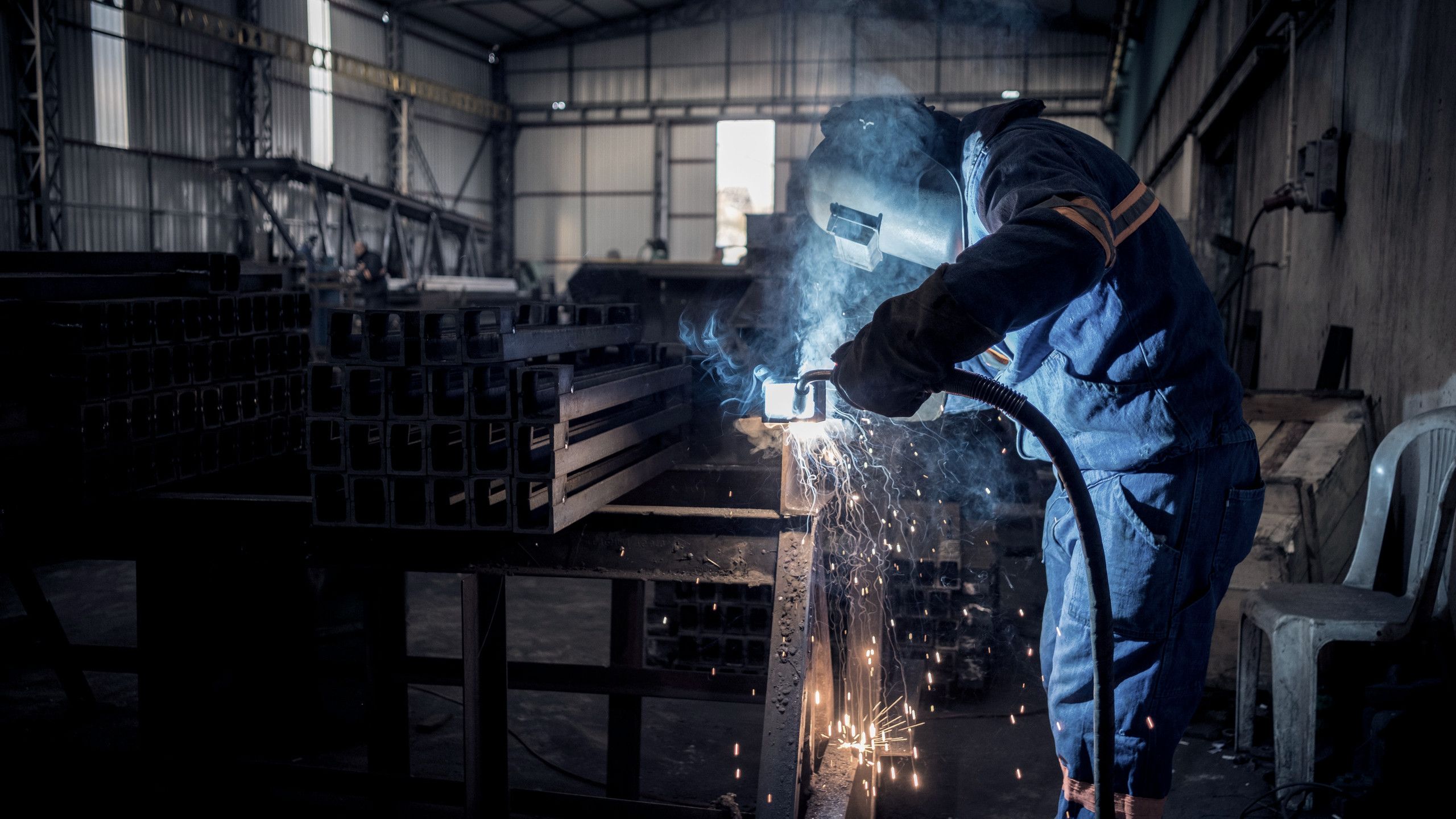
Photo: Ahmet Çığşar on Pexels
In a manufacturing plant, inventory moves all day between the warehouse, the line and finished goods, and scrap is either measured by manufacturing order, at the moment it happens, or it ends up as an adjustment at closing. Odoo 20 runs the plant in the same database as purchasing, sales and accounting, and the work starts on the floor, with how materials are picked, how product is made and where it is inspected, before the first bill of materials is configured.
What we solve in the operation
-
Scrap that shows up at month-end
Lost material surfaces in the closing adjustment, and by then nobody can say in which order, in which operation or why it was lost.
How Odoo solves it
Manufacturing records scrap from the order itself, at the moment it happens and with its reason. The actual consumption of components stays on the order even when it differs from the bill of materials, and with perpetual inventory valuation, whatever is scrapped is booked as a loss at its value.
Modules
- Manufacturing
- Inventory
- Accounting
-
Cost that only becomes known at closing
Prices are set with a standard cost nobody updates, and the real margin of each product is discovered once the month has closed.
How Odoo solves it
Each manufacturing order gathers the cost of the components it consumed and of the time spent at each work center, and its overview breaks it down by component and by operation, with the expected cost next to the actual cost. With average or FIFO costing, each completed order's actual cost flows into the product's cost, which is what the sales margin is calculated with.
Modules
- Manufacturing
- Accounting
-
Material that goes to the line without a record
Components leave the warehouse for the line without a document, and by midweek the inventory in the system no longer resembles the one on the floor.
How Odoo solves it
Odoo 20 manufactures in one, two or three steps: with two, picking components for the line is a transfer of its own; with three, so is taking finished goods back to stock. Every move requires its lot or serial number when the product is tracked, and Barcode captures them with the scanner.
Modules
- Manufacturing
- Inventory
- Barcode
-
Inspection that lives on paper
Quality checks are written on printed forms, and when a customer complains or the auditor arrives, the evidence is in a binder nobody can find.
How Odoo solves it
Odoo 20 Quality triggers checks at control points defined by product, by category and by operation, whether receipt, manufacturing or delivery, at the frequency that is set. Each check can be pass-fail, measurement, instructions, picture or a worksheet, it is recorded with its result, and a quality alert is raised from any failed check.
Modules
- Quality
- Manufacturing
- Inventory
-
Production planned in a spreadsheet
The month's plan is built from the sales forecast in a spreadsheet, and raw materials arrive late or in excess.
How Odoo solves it
Odoo 20's master production schedule suggests demand from history, the average of the last 30 days, 3 or 12 months, or the same period of the previous year, with an adjustment factor, and proposes what to make and what to buy in each period, with a safety stock per product.
Modules
- Manufacturing
- Purchase
- Inventory
-
Floor progress reported from memory
The supervisor builds the shift report from what people tell them, and the real time of each operation never reaches the system.
How Odoo solves it
Shop Floor shows each operator the work orders of their work center; from there they start, pause and close each operation with its time recorded, and scrap components right from the floor.
Modules
- Shop Floor
- Manufacturing
-
Subcontracting tracked outside the system
Components go out to the subcontractor with a delivery slip, the finished product comes back without a match and the cost of the service is added by hand.
How Odoo solves it
Manufacturing subcontracting sends the components to the subcontractor, receives the finished product and adds the cost of the service to the cost of the product.
Modules
- Manufacturing
- Purchase
- Inventory
-
The stopped machine that holds up the schedule
Machines get attention when they break down, and an unplanned stop halts everything scheduled on that line.
How Odoo solves it
Maintenance schedules corrective and preventive requests for each piece of equipment on its calendar. When a work center goes out of service, the period is recorded, and Manufacturing moves its work orders to the alternative work center that has been defined.
Modules
- Maintenance
- Manufacturing
- Time Off
-
A schedule that cannot see which line is overloaded
Production is scheduled without seeing the load on each line, and the overload shows up when the order is already late.
How Odoo solves it
Each work center has its working hours, its efficiency, its OEE target and its alternative work centers, and work orders are planned on a Gantt chart by dragging them, also by employee.
Modules
- Manufacturing
-
The by-product that does not exist in the system
Trimmings, whey or reusable waste leave the line and get sold, but they never entered the system.
How Odoo solves it
By-products are declared on the bill of materials, go into inventory and can absorb part of the order's cost.
Modules
- Manufacturing
- Inventory
Nivolty solutions for this industry
Nivolty is a company in Quantum Garage's group that operates independently: it develops and guarantees its own products for Odoo Enterprise, and offers the CloudCore hosting. Its first AI Agents solution, for WhatsApp, is now available.
All Nivolty solutions-
Shuttle
Staff transportation, with routes and real-time GPS
-
Sentinel
Automated internal audit of the ERP
-
Radar Comply
Labor, foreign trade and data protection compliance
-
Radar Fiscal
Monitors the SAT; Odoo does the invoice stamping natively
-
CloudCore
Dedicated hosting for Odoo Enterprise
Guides that apply
-
Guide · Customization
Odoo Studio or custom development in Odoo 20: when each one fits
-
Guide · Implementation
How to implement Odoo in a mid-sized company: phases, data migration, cut-off, go-live and adoption
-
Guide · Migration
How to migrate to Odoo from CONTPAQi, Aspel, SAP Business One, NetSuite or Business Central
-
Guide · Payroll
Mexican payroll in Odoo 20: what it computes, how payslips are stamped and how to set it up
Odoo with your industry's processes
We show you how your sector's processes run in Odoo, with the judgment we bring to every project: first the process, then the module.
Frequently asked questions
Does Odoo help sustain an ISO certification?
Odoo 20 keeps the evidence an audit asks for: the lot of each component, quality checks with their results and the history of every inventory move. We support our clients as they get certified in ISO 9001, 22000 and 14001, adapting the ERP to what each standard requires.
Does Odoo work for a food manufacturing plant?
Yes. It tracks the lot and expiry date of every raw material and every finished product, with upstream and downstream traceability in a single report, quality checks at receipt and in process, and the by-products that come out of each order.
Does Odoo create the lot of the finished product?
Yes. In Odoo 20, the lot or serial number of the finished product is generated automatically when the manufacturing order is closed, with its expiry date and its traceability.
Does every shop-floor operator need a license?
Not necessarily as a full user. According to Odoo’s pricing page, a light user can use the Manufacturing shop floor as an employee, and the contract counts as a light user every employee registered without a user account; light users are billed separately, at their own price.